
Sports Physiotherapy for Cricket
Have an existing or previous AFL injury?
Need help with injury prevention or optimising performance?
WHO wE’VE wORKED wITH






Cricket's Back Injury Problem Isn't the Bowling Action, It's What's Happening in the Joints Nobody Is Looking At
Every fast bowler who develops a back injury gets told the same thing. Fix the action. Reduce the counter-rotation. Sort out the front arm. And while technique has a role, the reality of cricket's back injury crisis is that bowlers with textbook actions still break down, and bowlers with actions that make coaches wince can bowl for decades without significant spinal problems.
The difference almost never lives in the action itself. It lives in the thoracic spine that isn't rotating freely, the hips that have lost their mobility from sitting at school or a desk all week, and the deep stabilising system that fires a few milliseconds too late at front-foot contact to shield the pars interarticularis from the forces that arrive when the foot hits the crease.
Cricket's back injury crisis is a joint mobility and neuromuscular timing problem masquerading as a technique problem. Until that's understood, fast bowlers will keep breaking down, keep being told to rest, keep returning to the same action with the same restrictions, and keep injuring the same place.
Athletic Spine in Brunswick works with cricketers across Melbourne, providing spinal physiotherapy that addresses the actual mechanical drivers of fast bowling back injuries, not just the symptoms that end seasons.
Why Cricket Is Uniquely Demanding on the Spine
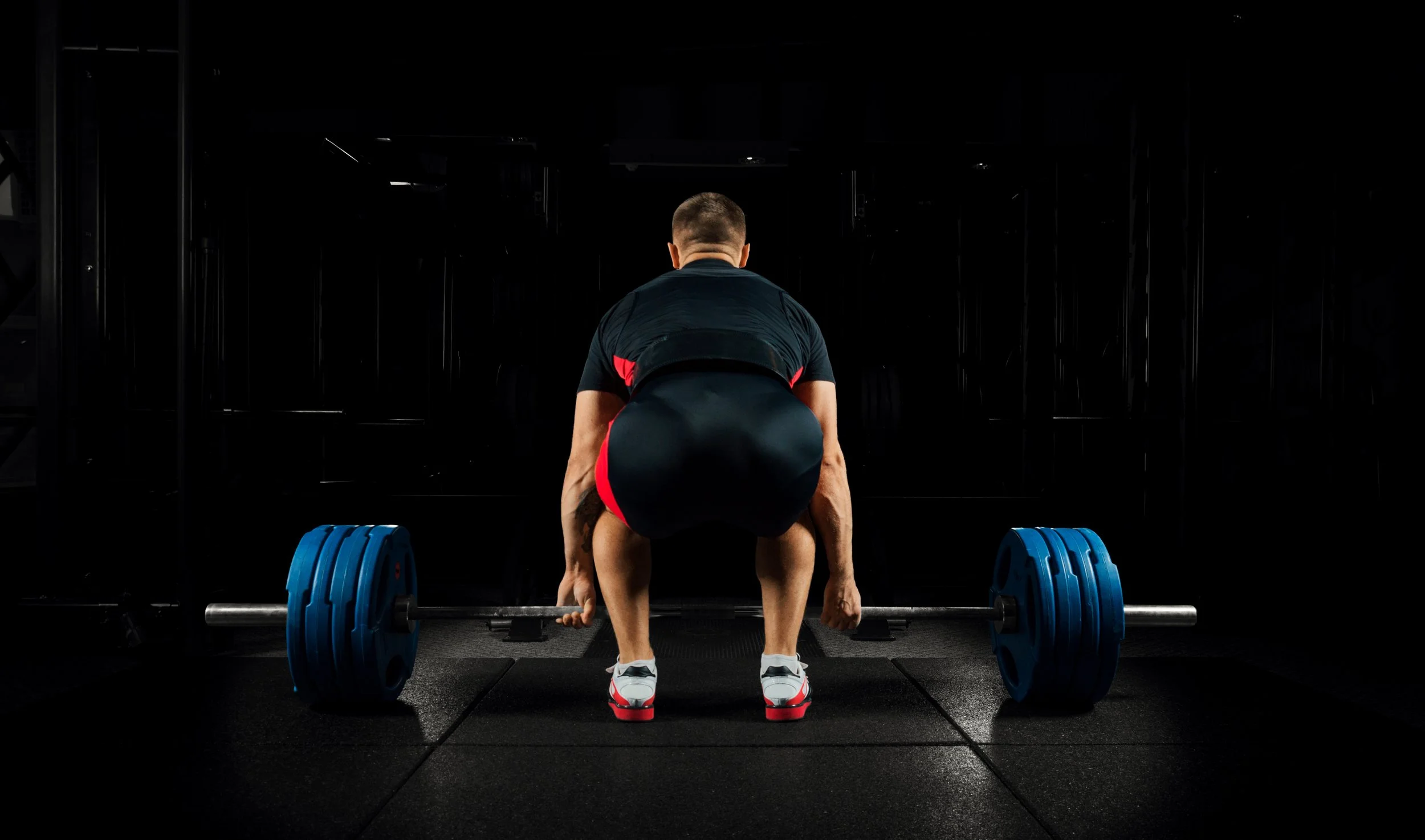
Fast bowling is one of the most biomechanically complex and asymmetrically demanding actions in sport. In a single delivery, the lumbar spine is required to move through extreme extension, lateral flexion, and rotation simultaneously, while the body decelerates from a high-speed run-up into a braced front-foot plant that generates ground reaction forces several times the bowler's body weight. That entire sequence happens in under a second, on one side of the body, delivery after delivery, match after match.
The lumbar spine is structurally designed to flex and extend efficiently. It is structurally poor at rotation, possessing only five to fifteen degrees of total rotational range. The structures that are designed to rotate are the hips and the thoracic spine. When those joints move freely and contribute their full rotational range to the bowling action, the lumbar spine sits within a mobile, well-supported chain and is largely protected from the rotational forces of the delivery stride.
When they don't, when the hips are restricted from sitting for long periods, when the thoracic spine has stiffened from a lack of specific rotational conditioning, the body doesn't simply stop bowling. It forces the lumbar spine to make up the rotational deficit. The lower back is required to twist and shear to a degree it was never anatomically designed for, with every single delivery. The passive osseous (bony) structures and spinal discs don't fail because of anything visible in the action. They fail because they were recruited to do a job that belongs to the joints above and below them.
The front-foot contact moment is the other critical variable. At the instant the front foot strikes the crease, ground reaction forces of up to six times body weight shoot up through the leg into the spine. The deep stabilising muscles, the multifidus, the obliques, must pre-activate before that foot hits the ground to create a rigid muscular cylinder around the vertebrae that shields the passive structures from the impact. When that pre-activation fires even a few milliseconds too late, which happens under fatigue, under match pressure, or following a previous back episode that subtly altered the motor pattern, the force of front-foot contact arrives at an unshielded lumbar spine. The pars and disc absorb what the muscular system failed to intercept.
Batting and wicketkeeping add different but equally specific spinal demands. The sustained lumbar flexion of the wicketkeeper's stance across a long day's play is one of the most underappreciated sources of spinal injury in cricket. The explosive rotational demand of the pull shot and the sustained extended batting stance create a different lumbar pattern to bowling, but one that is no less predictable once the mechanics are understood.
For Details on available services and to book a session, click the link below.
Most Common Spinal Conditions in Cricket
Spondylolysis (Pars Stress Reaction & Fracture) Spondylolysis is the defining injury of fast bowling and the one that ends more cricket careers than any other spinal condition. The pars interarticularis, the small bony bridges at the back of the lumbar vertebrae, is placed under repeated shear stress during the extension-rotation combination of the delivery stride. This is not an overuse injury in the conventional sense. It is a mobility bankruptcy problem. When the thoracic spine can't rotate freely and the hips can't contribute their full range, the lumbar spine is forced into a violent, asymmetrical hyperextension and twist with every delivery, concentrating the mechanical pinch at the pars of a single lumbar segment. In young and adolescent bowlers whose skeletal maturity is incomplete, this concentration is sufficient to create a stress reaction that progresses to fracture without early identification and movement retraining.
Lumbar Disc Irritation The lumbar discs sit between the vertebrae and act as the primary shock absorbers of the spinal column. In fast bowling, they are subjected to the combined mechanical demands of compressive ground reaction force at front-foot contact and the rotational shear of the delivery stride, simultaneously. When the thoracic spine lacks rotational mobility, the disc at the lower lumbar segments is forced to twist beyond its natural structural range to make up the deficit. This mechanical shearing of the disc presents as a deep lower back ache that intensifies across a bowling spell, is worst in sustained sitting after play, and can refer into the buttock or posterior thigh on the bowling side. Batters with disc-related pain typically find sustained crease occupation more provocative than the bat swing itself.
Lumbar Facet Joint Pain The lumbar facet joints guide and constrain rotational movement at each spinal segment. In fast bowling, they are compressed during the hyperextension and lateral flexion of the delivery stride, particularly on the non-dominant side of the lumbar spine, where the action creates an asymmetrical compressive force that accumulates across a bowling spell. When hip mobility is restricted and the pelvis can't rotate freely through the delivery stride, the facet joints take a concentrated, unshielded pinch with every delivery rather than sharing the rotational demand with the hip complex. Facet pain in cricketers is characteristically one-sided, sharp with extension and rotation, and frequently mistaken for a muscle strain because of its localised, unilateral character.
Thoracic Spine Stiffness Thoracic rotation is the primary engine of the bowling action. When it moves freely, it distributes the rotational demand of the delivery stride across a long chain of thoracic segments, each contributing a small share to the total rotation required. When it stiffens, which happens predictably in cricketers who spend long periods sitting at school, university, or work between training sessions, the rotation doesn't simply disappear. It gets forced downward into the lumbar spine. A bowler with restricted thoracic rotation is asking their lower back to generate the rotation their upper back can no longer contribute, on every single delivery. Restoring thoracic rotation is the single most impactful intervention for the majority of fast bowlers with recurring lower back complaints, and it is the intervention most consistently missing from standard cricket physiotherapy management.
Sacroiliac Joint Dysfunction The asymmetrical nature of the bowling action, landing on the same front foot, rotating in the same direction, generating power from the same side, creates a progressive rotational imbalance through the pelvis that concentrates at the sacroiliac joint on the front-foot landing side. This asymmetry is compounded in bowlers who don't engage in bilateral lower limb conditioning and is particularly pronounced in those whose hip rotation is restricted on the non-dominant side. SI joint pain in fast bowlers presents as a deep, unilateral posterior pelvic ache that is worst after bowling spells, single-leg landing activities, and sustained sitting, and is frequently attributed to a glute or hip flexor problem because of where the pain is felt.
How Athletic Spine Approaches Cricket Injuries
The standard management pathway for fast bowling back injuries, rest, scan, reduced bowling, gradual return, addresses the symptom without identifying the mechanical failure that produced it. A bowler who rests a pars stress reaction, returns to bowling with the same thoracic stiffness and the same delayed stabiliser activation pattern, and bowls the same action is not recovering. They are waiting.
Assessment at Athletic Spine for a cricketer starts with the bowling action, not to coach the technique, but to identify where in the kinetic chain the mechanical failure is occurring. That means measuring thoracic rotation in both directions and identifying the degree of restriction. It means assessing hip internal and external rotation on both sides and mapping the asymmetry to the delivery stride. It means evaluating the timing and consistency of deep lumbar stabiliser pre-activation at the simulated moment of front-foot contact.
From there, rehabilitation focuses on the two parallel streams that drive the majority of fast bowling injuries:
- Restoring thoracic rotation and hip mobility, the segments that are supposed to be contributing to the rotational demand of the delivery stride but aren't. When these joints move freely again, the lumbar spine stops being asked to generate rotation it was never designed to produce.
- Retraining deep stabiliser pre-activation timing, so that the muscular shield around the vertebrae is in place before front-foot contact rather than arriving milliseconds after the forces do. This is the difference between a spine that is actively protected on every delivery and one that is exposed at exactly the wrong moment.
Return to bowling is built progressively around the specific demands of the action, not a generic functional baseline that stops well short of what bowling at pace actually requires. Batters and wicketkeepers are returned to the specific sustained positions and movement demands of their role, with attention to the next-day response at each stage of progression.
Cricketers who come through Athletic Spine leave understanding exactly why their injury developed, what their movement system needs to maintain to stay on the field across a long season, and how to monitor and self-manage their early warning signs without becoming reliant on passive treatment to get through every match week.
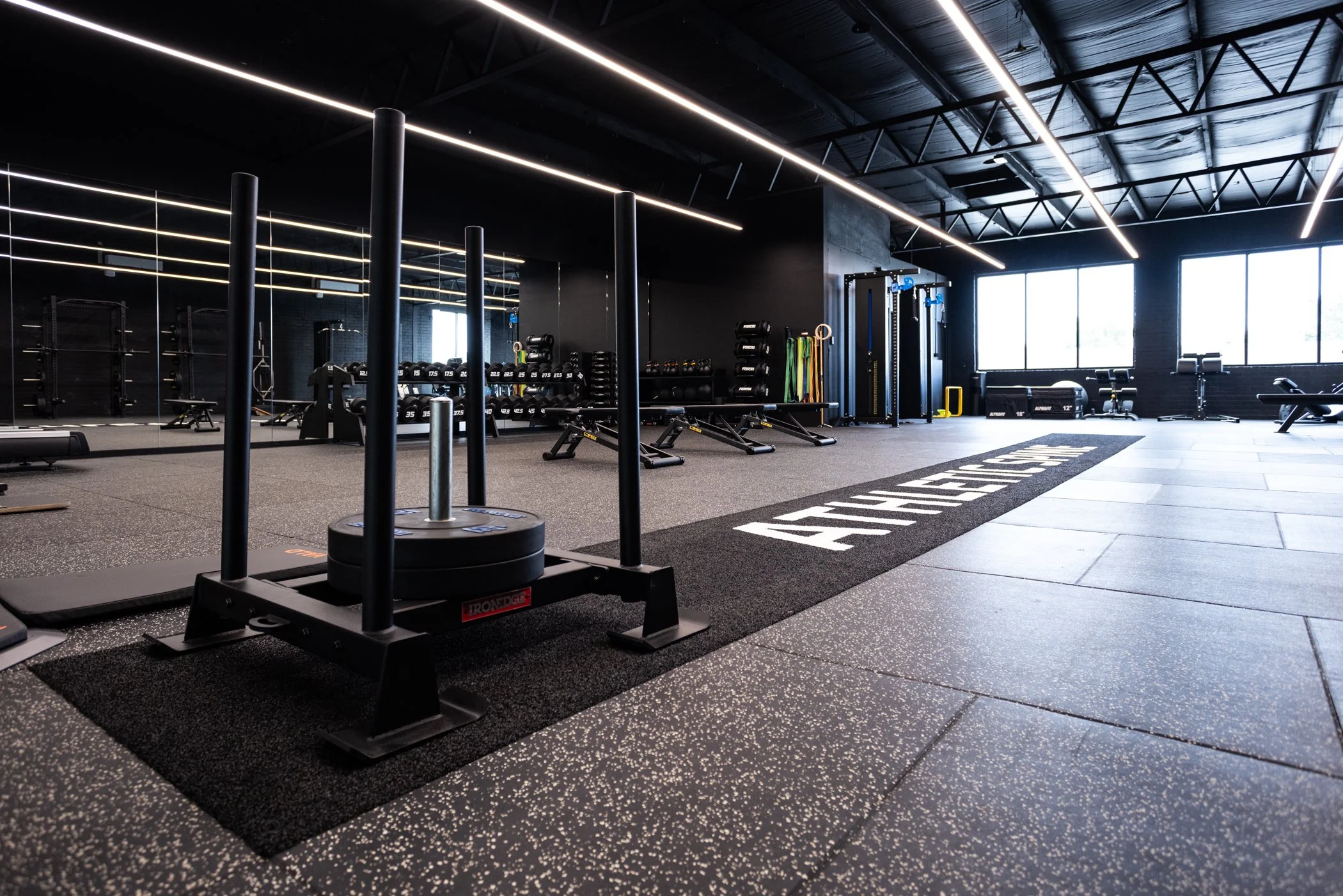
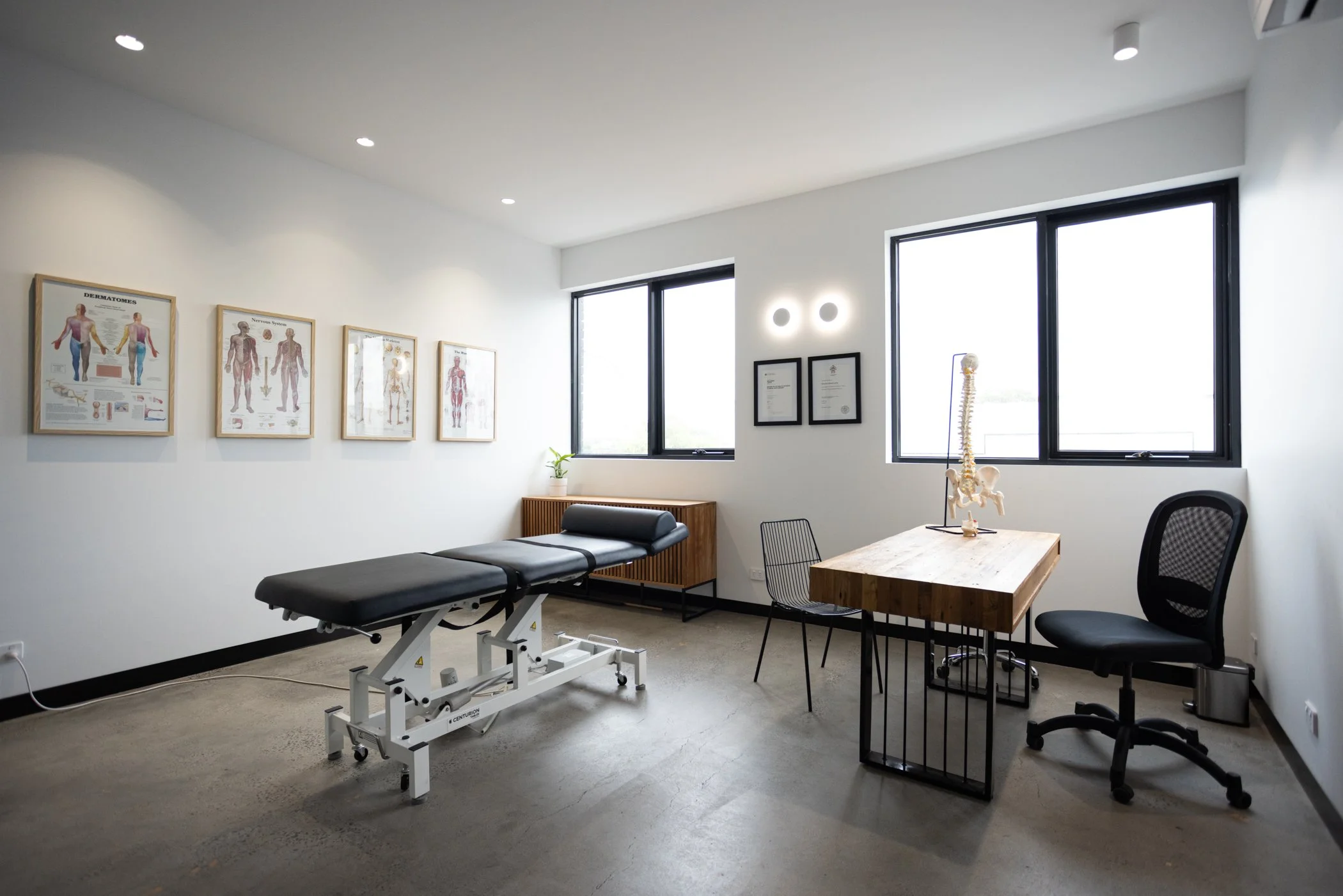
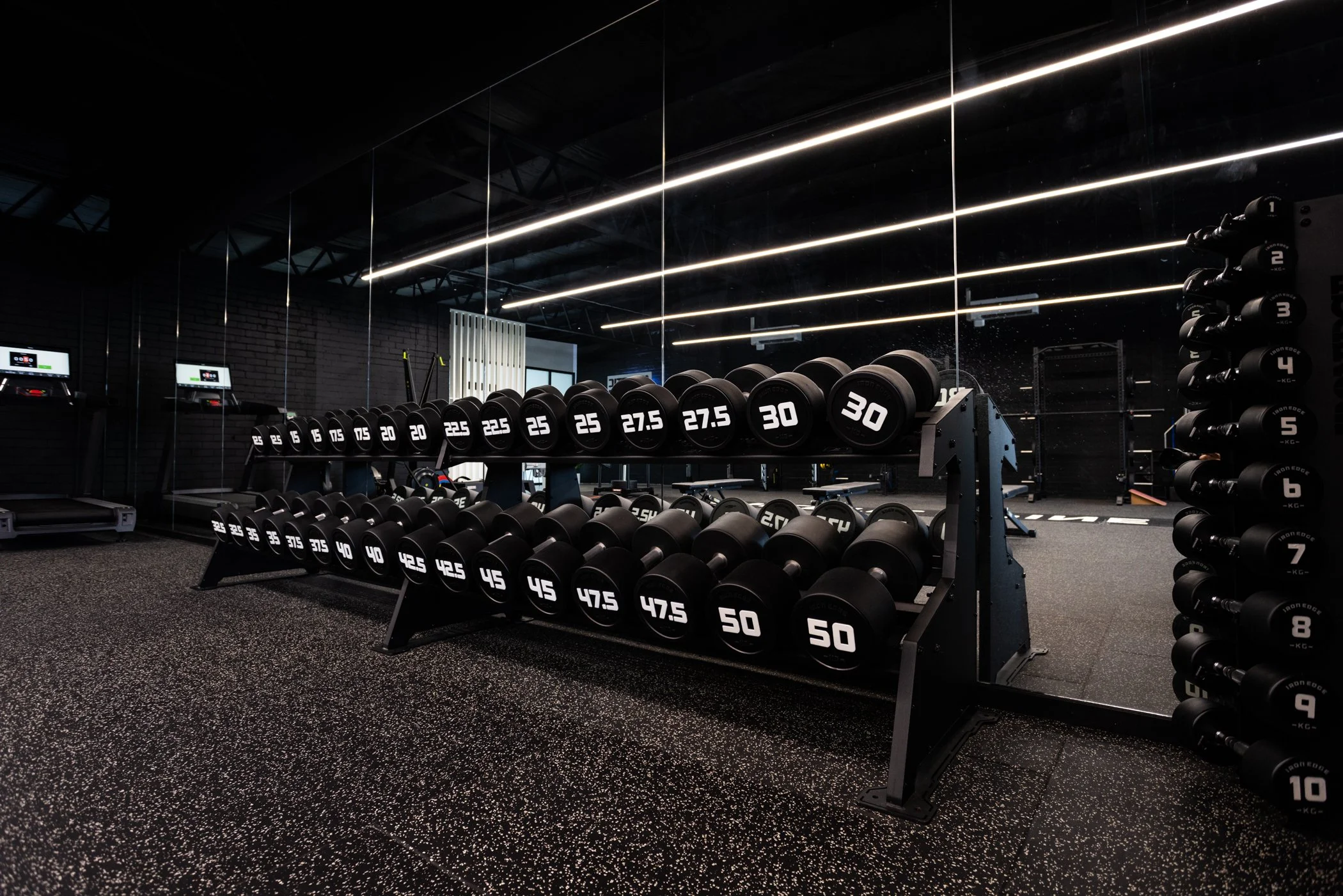
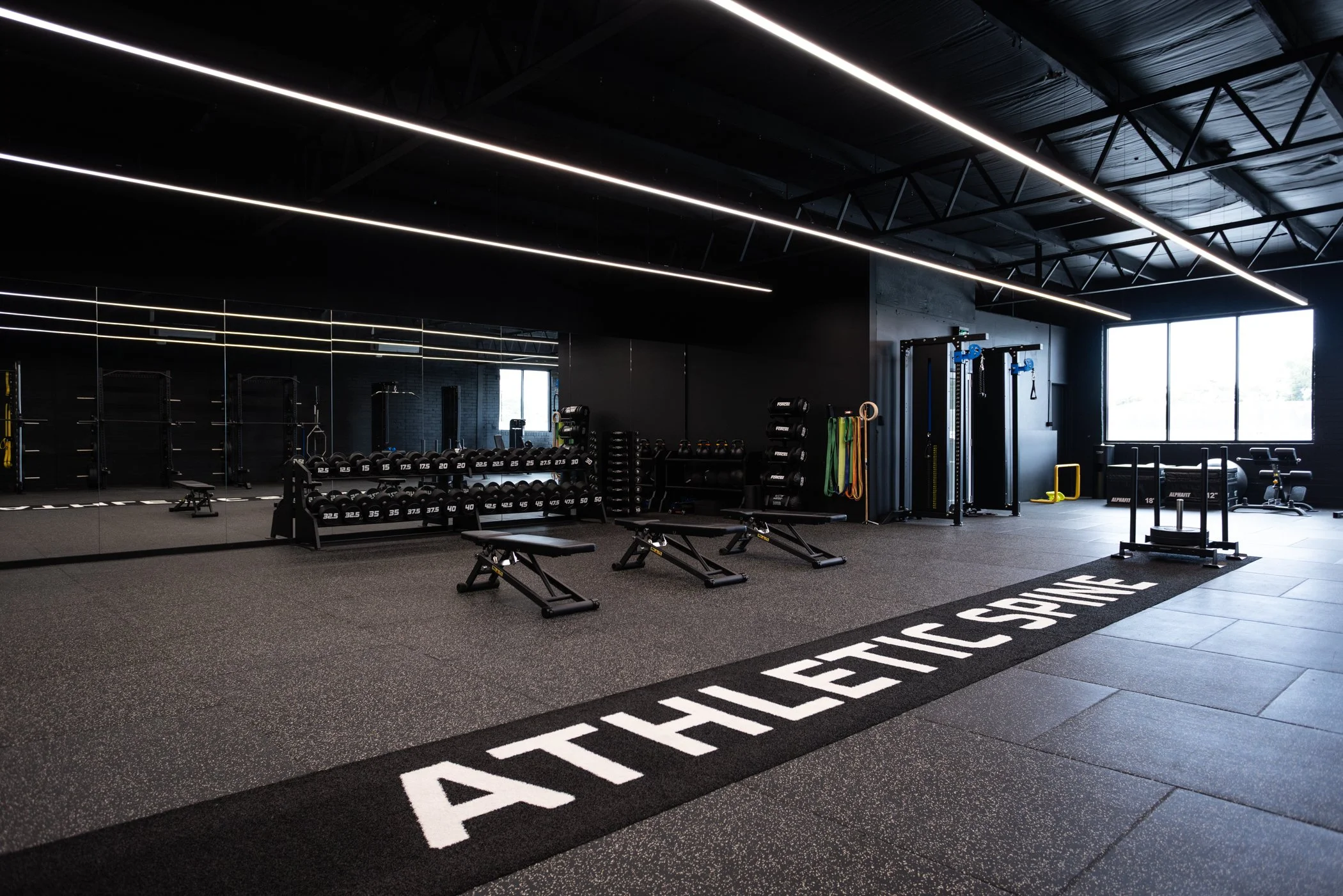
Who We Work With
Athletic Spine works with cricketers of all levels and roles across Melbourne, from junior and adolescent fast bowlers dealing with their first episode of back pain, to senior and premier grade players managing a recurring lumbar complaint across a long competition season, to masters cricketers who want to keep bowling competitively well into their forties and fifties.
We work with players from clubs across Brunswick, Carlton, Fitzroy, Coburg, and surrounding Melbourne suburbs, as well as players and coaches travelling from across Melbourne who want spinal physiotherapy that understands the specific mechanical demands of fast bowling, batting, and wicketkeeping.
Playing role shapes every aspect of the assessment and rehabilitation plan. A front-line fast bowler has completely different spinal demands to an opening batter or a wicketkeeper standing up to the stumps across a long innings. The approach at Athletic Spine is always built around the specific mechanical demands of the individual player's role in the game, not a generic cricket physiotherapy framework.
Frequently Asked Questions
Why do fast bowlers keep getting the same back injury every season?
Recurring back injuries in fast bowlers almost always reflect a return to bowling with the same thoracic restriction and the same stabiliser timing failure that drove the original injury. The pars stress reaction or disc irritation settles with rest, the bowler is declared fit, and they return to the crease with the same mechanical pattern, because rest doesn't restore thoracic rotation or retrain stabiliser pre-activation timing. The same joints absorb the same unshielded forces with every delivery, and the same structure fails again, often within the first heavy bowling week of the new season.
Is the bowling action the main cause of back injuries in cricket?
The action is rarely the primary driver and is almost never sufficient as a standalone explanation. Bowlers with technically challenging actions bowl for long careers without back problems. Bowlers with clean actions develop serious back injuries. The difference almost always lives in what the joints above and below the lumbar spine are doing, specifically, whether the thoracic spine is rotating freely and whether the hips are contributing their full range to the delivery stride. When those joints are mobile and contributing, the lumbar spine is protected. When they're restricted, the lumbar spine compensates, and the action simply determines where in the compensation pattern the failure manifests.
What is the difference between a pars stress reaction and a pars fracture?
A pars stress reaction is an early-stage bony stress response, the bone is under concentrated mechanical stress but has not yet fractured. At this stage, the injury is reversible with appropriate management and movement retraining, and return to full bowling is realistic with a well-structured rehabilitation plan. A pars fracture indicates the bone has failed at the stress concentration point and requires a longer period of extension-skill modification while bony healing occurs. The clinical distinction between the two requires imaging, MRI is the most sensitive early investigation, with CT providing the clearest picture of fracture status. Early assessment when symptoms first appear is the single most important factor in determining outcome.
Can a cricketer keep batting and wicketkeeping while recovering from a fast bowling back injury?
In many cases, yes, provided the batting and wicketkeeping demands don't reproduce the specific positions that are provoking the spinal symptoms. Batting rarely involves the hyperextension and rotational demands of fast bowling, and many bowlers with lumbar back injuries can continue batting with minimal modification. Wicketkeeping involves sustained lumbar flexion in the standing-up position that can be provocative for disc-related presentations, and this needs to be assessed individually rather than assumed to be safe. The goal is to keep the player involved in as much of the game as possible throughout rehabilitation, not to remove them from all cricket activity while they wait for pain to resolve.
Ready to Get Back to Bowling?
A back injury that ends your season, limits your bowling spell length, or keeps returning every pre-season is not an inevitable part of being a fast bowler. Athletic Spine provides spinal physiotherapy in Brunswick for cricketers across Melbourne, focused on identifying the joint mobility restrictions and stabiliser timing failures that are allowing the lumbar spine to absorb the demands that belong to the thoracic spine and hips.
Book an assessment at Athletic Spine and find out exactly what your movement chain is doing at the moment of front-foot contact, and what it actually takes to bowl a full season without the same injury stopping you.
For Details on available services and to book a session, click the link below.
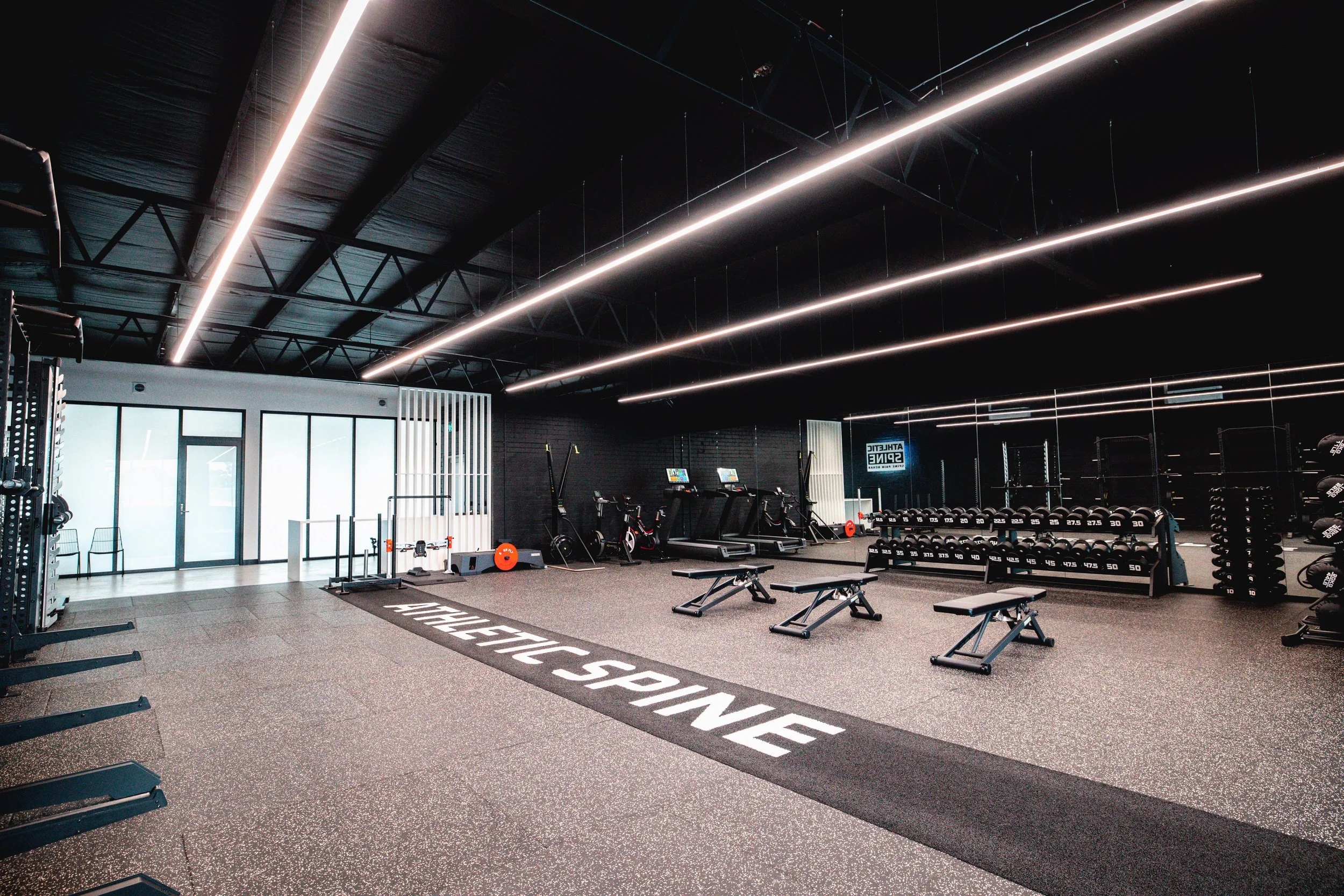
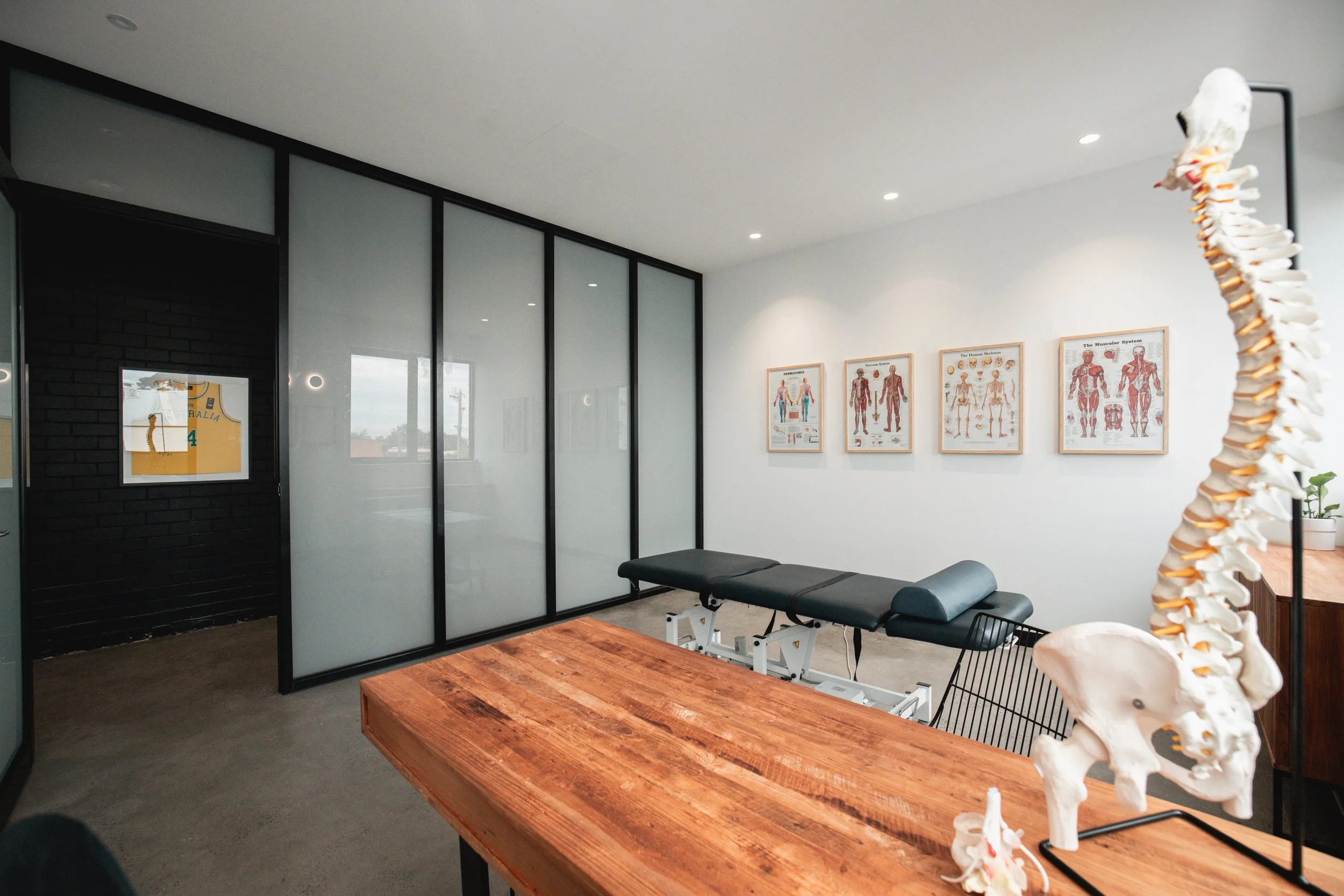
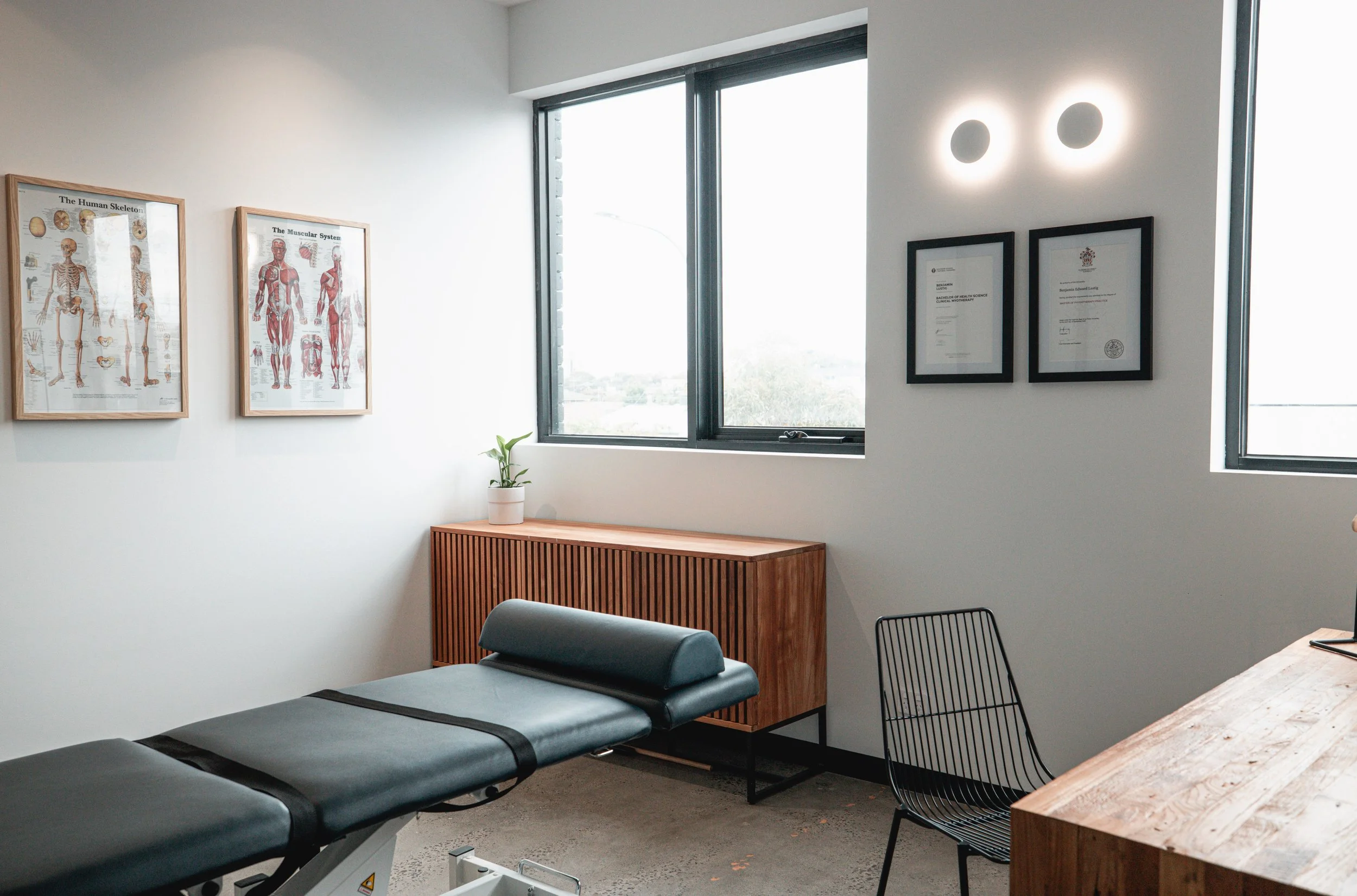
The Clinic

Are You A New Patient?
All new patients are invited to book an initial Physiotherapy consultation. The initial consultation includes:
Medical & injury history
Clinical and/or performance related goals established
Full Physiotherapy assessment & diagnosis
Individualised posture, mobility, strength and technique corrections
Modification of daily and/or training movements to reduce re-injury risk
Education to enhance understanding of the injury and reduce relapse risk
Follow up to enhance accountability & support
One hour duration
HICAPS available onsite to process private healthcare & Medicare rebates (where eligible)
Meet The Team

YOMITHA NAVARATNE
Benjamin Lustig
FounderBHSc M. Physio
M. Sports PhysioRecent Blogs



Location
Athletic Spine is located at 83A Weston Street, Brunswick, Victoria 3056
For Details on available services and to book a session, click the link below.
Contact
We greatly look forward to hearing from you. Please complete the form below to get in touch. Otherwise you can book an appointment online here.