
Sports Physiotherapy for Runners
Have an existing or previous AFL injury?
Need help with injury prevention or optimising performance?
WHO wE’VE wORKED wITH








Runners Don't Get Back Pain From Running, They Get It From How Their Spine Behaves When Everything Else Breaks Down
Ask a runner why their back hurts and they'll usually blame the distance. Too many kilometres, too many consecutive days, a long run that tipped them over the edge. And while pacing and preparation matter, they're rarely the whole story, because the runners who present to Athletic Spine with spinal pain aren't usually the ones who ran too far. They're the ones whose spinal control quietly deteriorated across the run, and whose back was compensating for mechanical failures elsewhere in the chain long before pain arrived.
Running looks simple from the outside. One foot in front of the other, repeated. But from a spinal mechanics perspective, running is a single-leg sport executed at speed, on repeat, with the lumbar spine and pelvis required to maintain precise rotational control against the ground reaction forces generated with every footstrike. When that rotational control degrades, through hip weakness, thoracic stiffness, or fatigue-driven movement breakdown, the lumbar spine stops being a stable platform and starts being a shock absorber. And shock absorbers wear out.
Athletic Spine in Brunswick works with runners across Melbourne, providing spinal physiotherapy that understands running as a movement system, not just an activity that occasionally produces back pain.
Why Running Is Uniquely Demanding on the Spine
Running is fundamentally a rotational activity. With every stride, the pelvis rotates forward on the stance leg side while the thoracic spine counter-rotates in the opposite direction, a coordinated movement pattern that distributes the rotational energy of running across the full length of the spine and keeps forward momentum efficient. When that counter-rotation is working well, the lumbar spine sits between two mobile, coordinated segments and is largely protected from the rotational forces passing through it.
When it breaks down, which it does predictably under fatigue, with hip restriction, or with thoracic stiffness, the lumbar spine is no longer a protected middle segment. It becomes the point where all the unresolved rotational energy from the stride concentrates. The result is a lumbar spine that is twisting, shearing, and absorbing impact forces it was never designed to manage in isolation, on every single footstrike, for the duration of the run.
The asymmetrical nature of running makes this worse. Most runners have a dominant stride pattern, a longer stride on one side, a stronger push-off on one leg, a more pronounced arm swing on one side. These asymmetries are often invisible at easy pace but become mechanically significant at tempo and race pace, when the forces involved are substantially higher and the demand on spinal rotational control is at its greatest.
Hip extension is the most critical variable in running-related spinal pain. The lumbar spine and the hip must work in precise coordination during the push-off phase of each stride, the hip extending while the lumbar spine remains stable and neutral. When hip extension range is restricted, which happens predictably in runners who sit for long hours at work, the lumbar spine compensates by going into extension and anterior pelvic tilt to manufacture the stride length the hip can't provide. That compensatory lumbar extension happens at exactly the moment of maximum push-off force, creating a repetitive facet joint compression pattern that is the defining mechanical signature of running-related lower back pain.
For Details on available services and to book a session, click the link below.
Most Common Spinal Conditions in Running
Lumbar Facet Joint Pain Facet joint irritation is the most common spinal condition in runners and is almost always traceable to a failure of hip extension on one or both sides. When the hip can't extend freely through the push-off phase, the lumbar spine tilts anteriorly and extends to compensate, compressing the facet joints on the affected side with every stride. The pattern is predictable: pain that starts as a mild ache in the early kilometres and progressively intensifies as the run continues, often accompanied by a stiffness that is worst immediately after stopping and gradually eases with walking. Runners frequently attribute this to tight hip flexors and spend months stretching them without addressing the facet joint or the movement pattern driving the problem.
Lumbar Disc Irritation Disc-related pain in runners tends to present differently to facet pain, it is more provoked by the sustained post-run recovery positions than by the dynamic impact of the stride itself. Runners with disc involvement often find that sitting in the car after a long run, sustained desk work later in the day, or waking up the morning after a hard session is more provocative than the run itself. The disc is stressed during running by the compressive and shear forces of footstrike, particularly when a stiff thoracic spine forces the lower lumbar segments to twist while simultaneously absorbing the impact forces of footstrike. When thoracic stiffness prevents the upper body counter-rotation from absorbing its share of the rotational demand, the disc at the lower lumbar segments absorbs the deficit.
Sacroiliac Joint Dysfunction The sacroiliac joint manages the transfer of ground reaction force from the stance leg into the trunk with every footstrike. In runners with asymmetrical hip mechanics, a longer stride on one side, reduced glute activation on one side, or a habitual lateral trunk lean, the two sides of the pelvis experience different rotational forces with every stride. Over time, this asymmetry creates a progressive rotational imbalance at the sacroiliac joint that presents as a deep, unilateral posterior pelvic pain. Runners with SI joint dysfunction describe a pain that is localised to one side of the pelvis or lower back, is worst in the first few kilometres before warming up, and often has a catching or locking quality on the affected side during the stance phase of running.
Thoracic Spine Stiffness Thoracic rotation is the counterbalancing mechanism that allows the pelvis to rotate freely during running without the lumbar spine being dragged into rotation with it. When thoracic rotation is restricted, which is almost universal in runners who spend most of their waking hours sitting at a desk, the pelvis and lumbar spine rotate as a single unit rather than as two independently mobile segments. This transfers the full rotational demand of running into the lumbar joints and discs rather than distributing it across the full spine. A runner with thoracic stiffness will almost always have a reduced arm swing on the restricted side and a compensatory lateral trunk lean, and their lumbar spine will be doing the work of two spinal regions with every stride.
Nerve Root Irritation and Referred Pain Runners frequently present with leg symptoms, pain, tingling, or heaviness in the buttock, posterior thigh, or calf, that they attribute to hamstring tightness, piriformis syndrome, or ITB problems. In many of these cases, the source is the lumbar spine rather than the structure where symptoms are felt. Lumbar facet joints can refer pain into the buttock and posterior thigh in patterns that are indistinguishable from hamstring pain without clinical assessment. Lumbar disc irritation can produce nerve root symptoms that travel into the calf and foot. Runners who have been stretching and foam rolling the same structure for months without improvement should consider whether the lumbar spine is the actual source of what they're feeling.
How Athletic Spine Approaches Running Injuries
Runners are among the most self-aware patients at Athletic Spine, they've usually already identified the pattern of their pain, tried multiple interventions, and arrived with a clear account of what works temporarily and what doesn't. What they haven't usually had is an assessment that looks at the full movement system rather than the symptomatic structure in isolation.
Assessment at Athletic Spine for a runner starts with the running stride itself. That means evaluating hip extension range and how it changes between sides, assessing thoracic rotation and how the counter-rotation pattern responds to increasing pace, identifying whether the pelvis is staying level or dropping and rotating asymmetrically during the stance phase, and understanding where in the run the movement pattern begins to degrade.
From there, rehabilitation is built around the specific mechanical failure that's driving symptoms. For most runners, that involves two parallel streams: restoring the mobility in the joints that are supposed to be contributing to the stride, hip extension, thoracic rotation, and retraining the neuromuscular control patterns that protect the lumbar spine during the specific phase of the stride where the breakdown is occurring.
Runners are kept running throughout rehabilitation wherever possible. Complete rest removes the movement stimulus the spine needs to adapt and delays return to sport without addressing the mechanical cause. The approach at Athletic Spine adjusts the environment, modifying the running surface, gradient, and target pace, while maintaining as much running as the presentation allows, and progressively reintroduces the full demands of the runner's training as the movement system improves.
Runners who come through Athletic Spine leave understanding exactly what their spine is doing during their stride, what their early warning signs look like as pace and distance increase, and how to prepare and adapt their training when symptoms begin to emerge, without needing passive treatment to manage a problem that never fully resolves on its own.

Who We Work With
Athletic Spine works with runners of all levels and backgrounds across Melbourne, from recreational runners dealing with their first episode of back pain, to competitive club and road runners managing a recurring lumbar complaint that keeps disrupting their training, to ultra-distance runners who need their spine to maintain structural integrity across complex terrain and hours of continuous movement.
We work with runners from across Brunswick, Fitzroy, Carlton, Coburg, and surrounding Melbourne suburbs, a community with one of the highest concentrations of active runners in Victoria. We also work with runners preparing for specific events, marathons, trail runs, road races, who want to address a spinal issue before it becomes a race-day problem.
Running experience and training context shape every aspect of the assessment. A runner doing three easy kilometres twice a week has completely different mechanical demands to one training for a marathon at threshold pace. The approach is always built around the specific demands of the individual runner's training, not a generic return-to-running protocol.
Frequently Asked Questions
Why does my lower back hurt on long runs but not on short ones?
This pattern reflects a fatigue-driven degradation of structural control rather than an inherent structural limitation. In the early kilometres, the neuromuscular system maintains good hip extension, thoracic counter-rotation, and pelvic control. As fatigue accumulates, those control patterns degrade, the hip stops extending fully, the thoracic spine stops counter-rotating, and the lumbar spine begins absorbing the rotational and compressive forces those segments are no longer managing. The back pain you feel on long runs is the spine signalling that the movement system has broken down, not that running long distances is inherently damaging.
Is running bad for the spine?
No. Running is not inherently damaging to the lumbar spine, and the evidence consistently shows that regular runners have healthier lumbar disc hydration and density than sedentary individuals. Running-related spinal pain reflects a mechanical breakdown in the movement system rather than damage caused by the act of running itself. The spine that hurts during running is a spine whose movement system, thoracic rotation, hip extension, pelvic control, isn't distributing the demands of the stride the way it should.
Why does my back feel fine during the run but seize up when I stop?
This is a facet joint behaviour pattern. During running, the continuous movement keeps the facet joint surfaces mobile and the surrounding musculature warm and active. When running stops, the joints cool, the protective muscle activation drops, and the inflammatory irritation that accumulated during the run becomes symptomatic. The stiffness and pain that appears when you stop, and gradually eases once you start moving again, is a reliable indicator that the posterior elements of the lumbar spine are being repeatedly compressed during a specific phase of your running gait.
Can I keep running while getting treatment for back pain?
In most cases, yes. Complete rest is rarely the right approach for running-related spinal pain because it removes the movement stimulus the spine needs to adapt and doesn't address the mechanical cause of the problem. What matters is identifying which aspects of your running, surface, gradient, pace, are provoking symptoms, adjusting those intelligently while the underlying movement pattern is addressed, and progressively reintroducing the full demands of your training as the spine's movement system improves.
Ready to Get Back to Running?
Back pain that follows you on every long run, that keeps disrupting your training build, or that has you managing distance rather than racing it, isn't something you have to accept as part of being a runner. Athletic Spine provides spinal physiotherapy in Brunswick for runners across Melbourne, built around understanding the running stride as a movement system and addressing the specific mechanical breakdown that's driving your symptoms.
Book an assessment at Athletic Spine and find out exactly what your spine is doing during your stride, and what it takes to run without the same problem following you kilometre after kilometre.
For Details on available services and to book a session, click the link below.
The Clinic
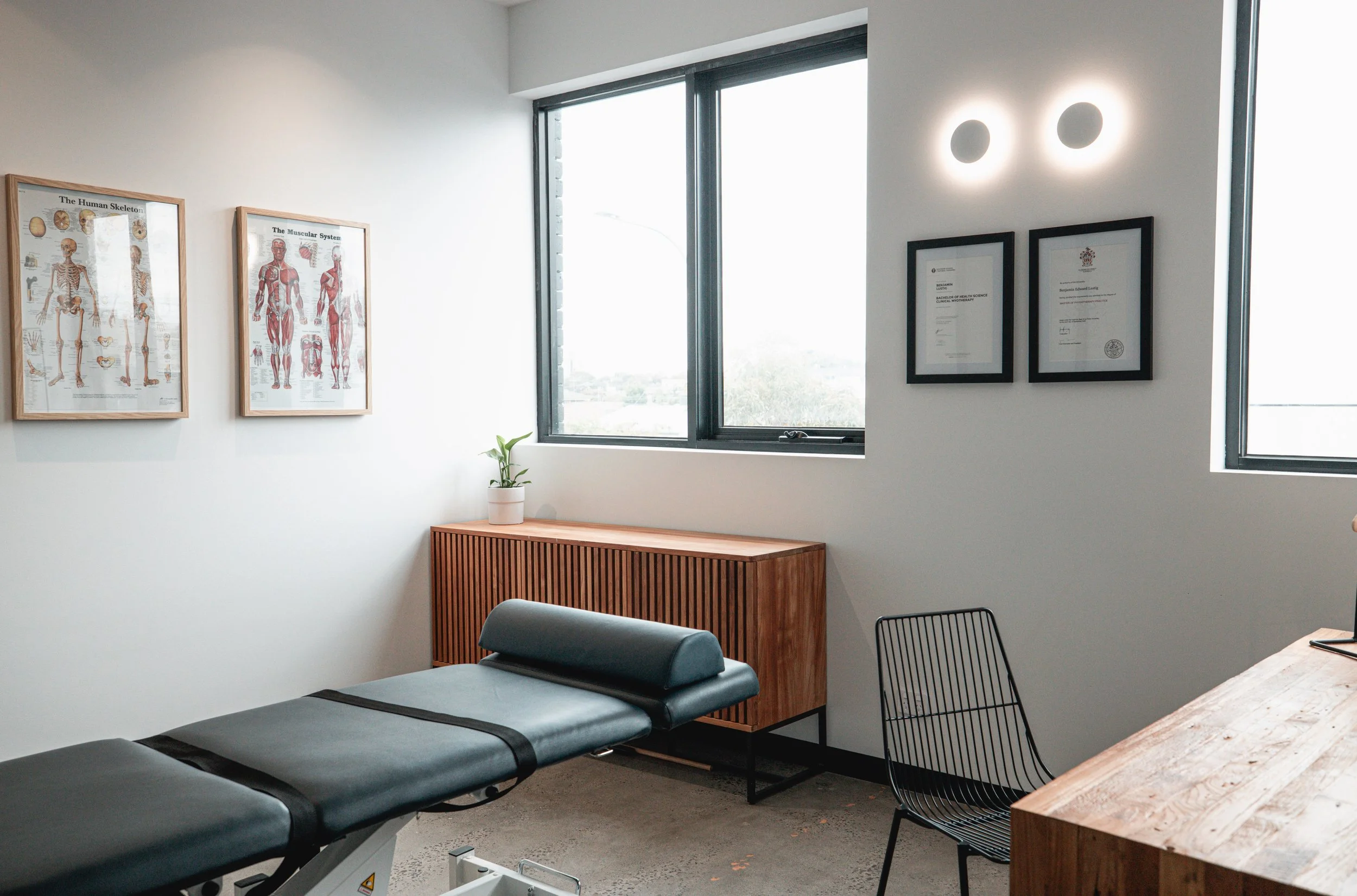

Are You A New Patient?
All new patients are invited to book an initial Physiotherapy consultation. The initial consultation includes:
Medical & injury history
Clinical and/or performance related goals established
Full Physiotherapy assessment & diagnosis
Individualised posture, mobility, strength and technique corrections
Modification of daily and/or training movements to reduce re-injury risk
Education to enhance understanding of the injury and reduce relapse risk
Follow up to enhance accountability & support
One hour duration
HICAPS available onsite to process private healthcare & Medicare rebates (where eligible)
Meet The Team

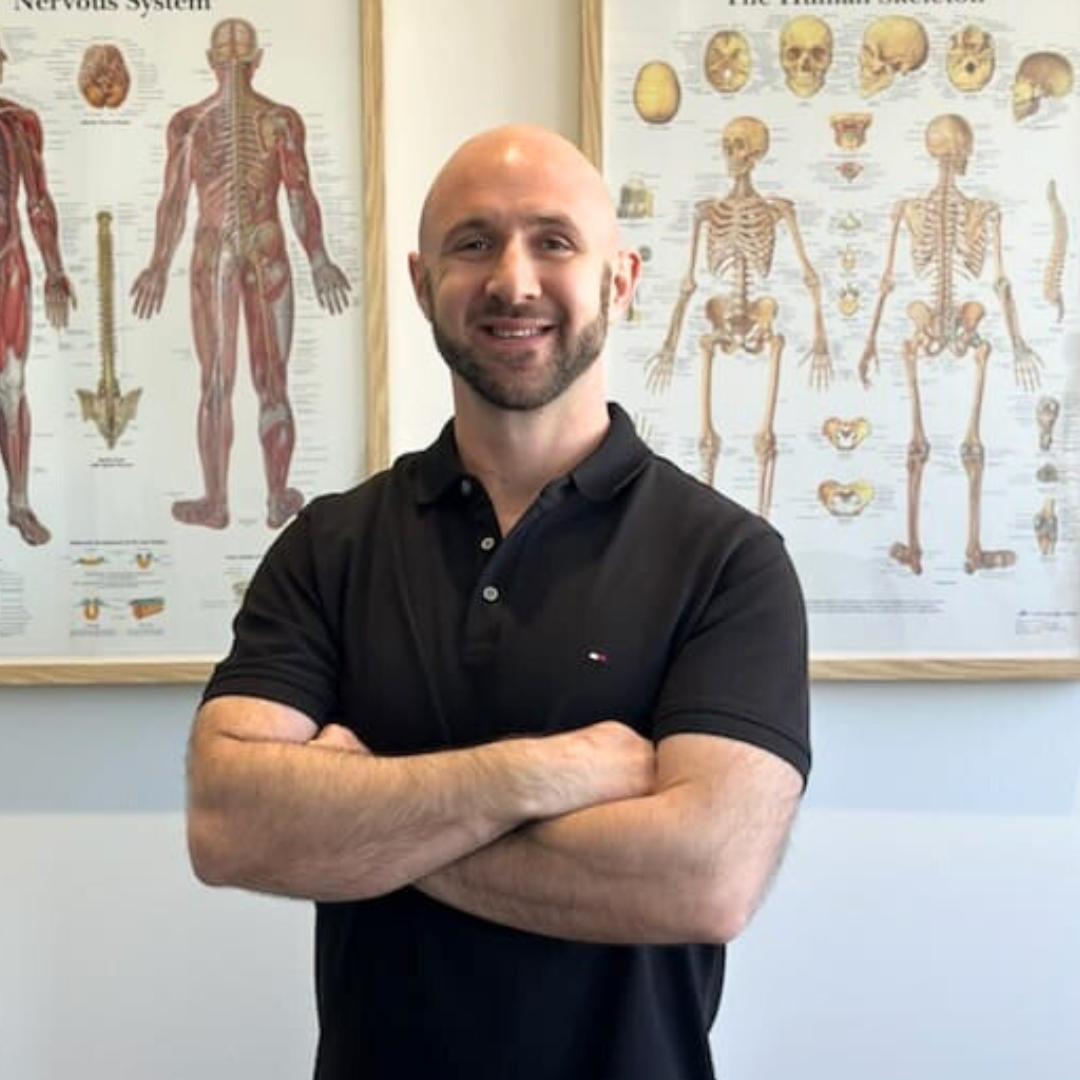
YOMITHA NAVARATNE
Benjamin Lustig
FounderBHSc M. Physio
M. Sports PhysioRecent Blogs



Location
Athletic Spine is located at 83A Weston Street, Brunswick, Victoria 3056
For Details on available services and to book a session, click the link below.
Contact
We greatly look forward to hearing from you. Please complete the form below to get in touch. Otherwise you can book an appointment online here.