
Sports Physiotherapy for Tennis
Have an existing or previous AFL injury?
Need help with injury prevention or optimising performance?
WHO wE’VE wORKED wITH








Tennis Players Don't Break Down From Hitting Too Hard, They Break Down From Hitting the Same Way Ten Thousand Times With the Same Restriction
Tennis players are meticulous about their game. They analyse their serve toss, their grip pressure, their footwork patterns, their racket head speed. They'll spend hours with a coach refining the technical details of a single stroke. And yet the same player who obsesses over their forehand crosscourt will completely ignore the progressive stiffness building in their thoracic spine that is quietly reshaping every single stroke they hit, until the lower back finally gives out and forces the issue.
Tennis back injuries don't usually announce themselves with a single dramatic event. They develop slowly, across thousands of repetitions of the same rotational pattern, through the same restricted movement chain, on the same dominant side. By the time pain arrives, the mechanical problem has usually been building for months, and it's not the tennis that caused it. It's the way the movement chain has been compensating for a restriction that was never addressed.
Athletic Spine in Brunswick works with tennis players across Melbourne, providing spinal physiotherapy that understands the rotational demands of the game from the serve through to the defensive retrieval, and what it takes to keep those demands from concentrating in the wrong place.
Why Tennis Is Uniquely Demanding on the Spine
Tennis is built on rotation. Every groundstroke, every volley, every serve involves the trunk rotating rapidly around the spine, generating racket head speed through the sequential unwinding of the hips, lumbar spine, thoracic spine, and shoulder. When that sequential unwinding works correctly, the rotational energy is distributed across multiple mobile segments and no single structure bears a disproportionate share of the demand.
When it doesn't, which happens whenever one segment in the chain is restricted, the rotation gets forced through whatever joints are available. And the joints that are almost always available, because they sit between the restricted thoracic spine above and the restricted hip below, are the lumbar facet joints. They become the pivot point for every stroke. And pivot points wear out.
The serve is the most mechanically demanding stroke in tennis for the spine. A modern tennis serve requires the lumbar spine to move from a position of lateral flexion and extension during the trophy position into a rapid, explosive rotation and forward flexion at ball contact, all while the shoulder is generating maximum racket head speed above. The forces involved are significant, and they concentrate at the lumbar level with particular intensity when thoracic extension and rotation are restricted and the lumbar spine is forced to manufacture the movement range the thoracic spine isn't providing.
The forehand and backhand add a different rotational pattern. The forehand, particularly the modern semi-western or western grip forehand with heavy topspin, requires aggressive internal rotation of the hitting shoulder combined with rapid trunk rotation. When the thoracic spine rotates freely, this movement is distributed efficiently. When it doesn't, the lumbar spine rotates beyond its natural range with every forehand, creating a repetitive shear at the lower lumbar segments that is cumulative and entirely predictable.
Tennis is also asymmetrical by definition. Every right-handed player serves, forehands, and smashes from the same rotational direction, developing a progressive asymmetry through the thoracic spine and lumbar region that left-handed players develop in the opposite direction. This asymmetry is the defining structural characteristic of the tennis spine, and it shapes every aspect of the injury pattern that eventually develops.
For Details on available services and to book a session, click the link below.
Most Common Spinal Conditions in Tennis
Lumbar Facet Joint Pain Lumbar facet joint irritation is the most common spinal condition in tennis players and is almost always driven by a combination of thoracic stiffness and hip rotation restriction that forces the lumbar facets to act as the primary rotational pivot for every stroke. The facets on the dominant hitting side, the right side in a right-handed player, are repeatedly compressed during the follow-through of groundstrokes and the extension-rotation of the serve. Tennis players with facet pain describe a sharp, one-sided lower back pain that is worst at the end of the serve and forehand follow-through, eases with rest, and progressively returns as the session continues. It is frequently misidentified as a muscle strain because of its localised, one-sided character.
Lumbar Disc Irritation The serve places the lumbar disc under a combination of extension, lateral flexion, and rotation simultaneously, a mechanical environment the disc is poorly designed to manage. When thoracic extension is restricted and the lumbar spine is forced to generate the upward drive of the trophy position from its own segments rather than distributing it across the thoracic spine, the posterior disc wall is subjected to a concentrated shear stress with every serve. Tennis players with disc involvement often describe a lower back pain that is worst after a long serving session, sitting in the car after training, and the following morning, and which refers into the buttock or posterior thigh on the dominant serving side.
Thoracic Spine Stiffness and Rotation Asymmetry Thoracic spine stiffness is both a consequence and a driver of tennis back injuries, and in many players it is the primary mechanical problem, even when the pain is felt in the lumbar spine. Years of hitting predominantly to one rotational direction creates a progressive asymmetry in thoracic rotation, the spine rotates freely in the backswing direction but becomes increasingly restricted in the follow-through direction. This asymmetry means every stroke is generating rotation from a thoracic spine that is already at its rotational limit on the dominant side, concentrating the remaining demand at the lumbar level. Restoring thoracic rotation symmetry is the single most impactful intervention for most tennis players with recurring lower back pain.
Spondylolysis (Pars Stress Reaction) Young tennis players, particularly those who serve at high intensity in their early to mid-teens before their skeletal maturity is complete, are at elevated risk of pars stress reactions at the lumbar spine. The serve's combination of lumbar hyperextension in the trophy position and rapid rotation at ball contact creates a repetitive mechanical pinch at the pars interarticularis that is directly analogous to the fast bowling injury pattern in cricket. This is not a core strength issue, it is a movement sequencing and joint mobility problem that concentrates stress at the most structurally vulnerable point in the lumbar arch during the most demanding stroke in the game.
Cervical Spine Pain and Stiffness The serve requires sustained cervical extension and rotation to track the ball toss, a movement that places the upper cervical facet joints into compression at exactly the moment the serving arm is generating maximum upward force. Players who serve frequently, particularly those with a high ball toss that requires prolonged upward gaze, develop a progressive stiffness in the upper cervical spine and suboccipital region that is directly related to the serve mechanics. This presents as a neck that feels stiff after a heavy serving session, loses extension range across a long match, and occasionally refers headache into the base of the skull and temple on the dominant side.
How Athletic Spine Approaches Tennis Injuries
Tennis players who come to Athletic Spine have almost always already tried the standard pathway, rest, soft tissue treatment, generic core exercises, a gradual return to hitting. And most of them are back within a few months with the same problem, because the thoracic restriction or hip rotation asymmetry that was driving the lumbar overload was never identified or addressed.
Assessment at Athletic Spine for a tennis player starts with the stroke mechanics, not to coach the technique, but to identify where in the kinetic chain the rotational demand is concentrating. That means assessing thoracic rotation in both directions and quantifying the asymmetry. It means evaluating hip internal and external rotation on both sides and how that asymmetry maps to the player's dominant stroke direction. And it means identifying the specific point in the serve or groundstroke sequence where the lumbar spine is being asked to do more than its share.
From there, rehabilitation focuses on restoring the mobility in the segments that are supposed to be contributing to the rotational demand, thoracic rotation, hip rotation, so the lumbar spine stops being the default pivot point for every stroke. That thoracic restoration is then integrated into the actual stroke pattern, because thoracic mobility on a treatment table doesn't automatically translate into thoracic contribution during a forehand at match pace.
Return to the court is built around the specific strokes and intensities that were provoking symptoms. Serving is typically the last element reintroduced, and it's reintroduced progressively, starting with reduced pace and controlled mechanics before returning to full match serving intensity. Tennis players who come through Athletic Spine leave with a clear understanding of their rotational asymmetry pattern, what early warning signs look like as match intensity increases, and how to maintain thoracic mobility as an ongoing part of their preparation rather than something they address only when the back flares.



Who We Work With
Athletic Spine works with tennis players of all levels and ages across Melbourne, from junior and development players dealing with their first serve-related back complaint, to competitive club and pennant players managing a recurring lumbar issue across a long season, to masters and recreational players who want to keep playing into their sixties and beyond.
We work with players from clubs across Brunswick, Carlton, Fitzroy, Coburg, and surrounding Melbourne suburbs, as well as players travelling from across Melbourne who want spinal physiotherapy that understands the rotational demands of tennis specifically, not generic sports back pain management.
Playing style and dominant stroke patterns shape every aspect of the assessment. A serve-and-volley player has different rotational demands to a baseline grinder. A two-handed backhand player has different thoracic asymmetry patterns to a one-handed backhand player. The approach is always built around the specific mechanical demands of how the individual actually plays the game.
Frequently Asked Questions
Why does my back hurt after tennis but not after other exercise?
Tennis generates a specific combination of rapid trunk rotation, lumbar extension, and asymmetrical rotational demand that most other exercise doesn't replicate. Running, gym training, and swimming don't ask the thoracic and lumbar spine to rotate rapidly in a single direction thousands of times from the same side. When your back responds specifically to tennis, it's pointing to a rotational asymmetry or restriction in the movement chain, not a general statement about the health of your spine. The pain is the lumbar spine signalling that it's doing the rotational work of segments above and below it that aren't contributing their share.
Is the serve the main cause of tennis back injuries?
The serve is the most mechanically demanding stroke for the lumbar spine, the combination of extension, lateral flexion, and rotation in the trophy position is unique in sport, and the forces generated at ball contact are substantial. But the serve doesn't cause back injuries in isolation. It exposes a thoracic restriction or hip rotation asymmetry that was already present. Players with freely rotating thoracic spines and symmetrical hip rotation rarely develop serve-related lumbar injuries, regardless of how hard they serve. The serve is the stress test. The thoracic and hip restriction is the structural problem it exposes.
Why does my back always tighten up on the second set but feel fine in the warmup?
This is a fatigue-driven pattern specific to the rotational demands of tennis. In the warmup and early stages of a match, the thoracic spine and hips are contributing reasonably well to the rotational demand of each stroke. As the match progresses and neuromuscular fatigue accumulates in the larger trunk rotators, the thoracic contribution to each stroke decreases and the lumbar spine picks up a progressively larger share of the rotational work. The tightening you feel in the second set is the lumbar facets responding to a rotational demand that has shifted progressively toward them as the match has worn on.
How does spinal physiotherapy for tennis differ from standard back treatment?
Standard back treatment addresses the symptomatic structure, the facet joint, the disc, the muscle, without identifying why that structure is being overloaded in the context of the sport. For tennis players, that means the underlying thoracic rotation asymmetry and hip rotation restriction that are concentrating the rotational demand of every stroke at the lumbar level are never addressed. Effective spinal physiotherapy for tennis players identifies the specific rotational restriction in the movement chain, restores it, integrates it into the actual stroke pattern, and builds the player back to full match intensity, not just pain-free everyday movement.
Ready to Get Back on the Court?
Back pain that costs you your serve speed, shortens your match play, or keeps returning at the same point in every season isn't something you have to accept as part of playing tennis. Athletic Spine provides spinal physiotherapy in Brunswick for tennis players across Melbourne, built around identifying and correcting the rotational restriction that's concentrating the demands of the game in your lumbar spine.
Book an assessment at Athletic Spine and find out exactly what your movement chain is doing during your serve and groundstrokes, and what it takes to get back on the court without the same restriction driving the same problem.
For Details on available services and to book a session, click the link below.
The Clinic
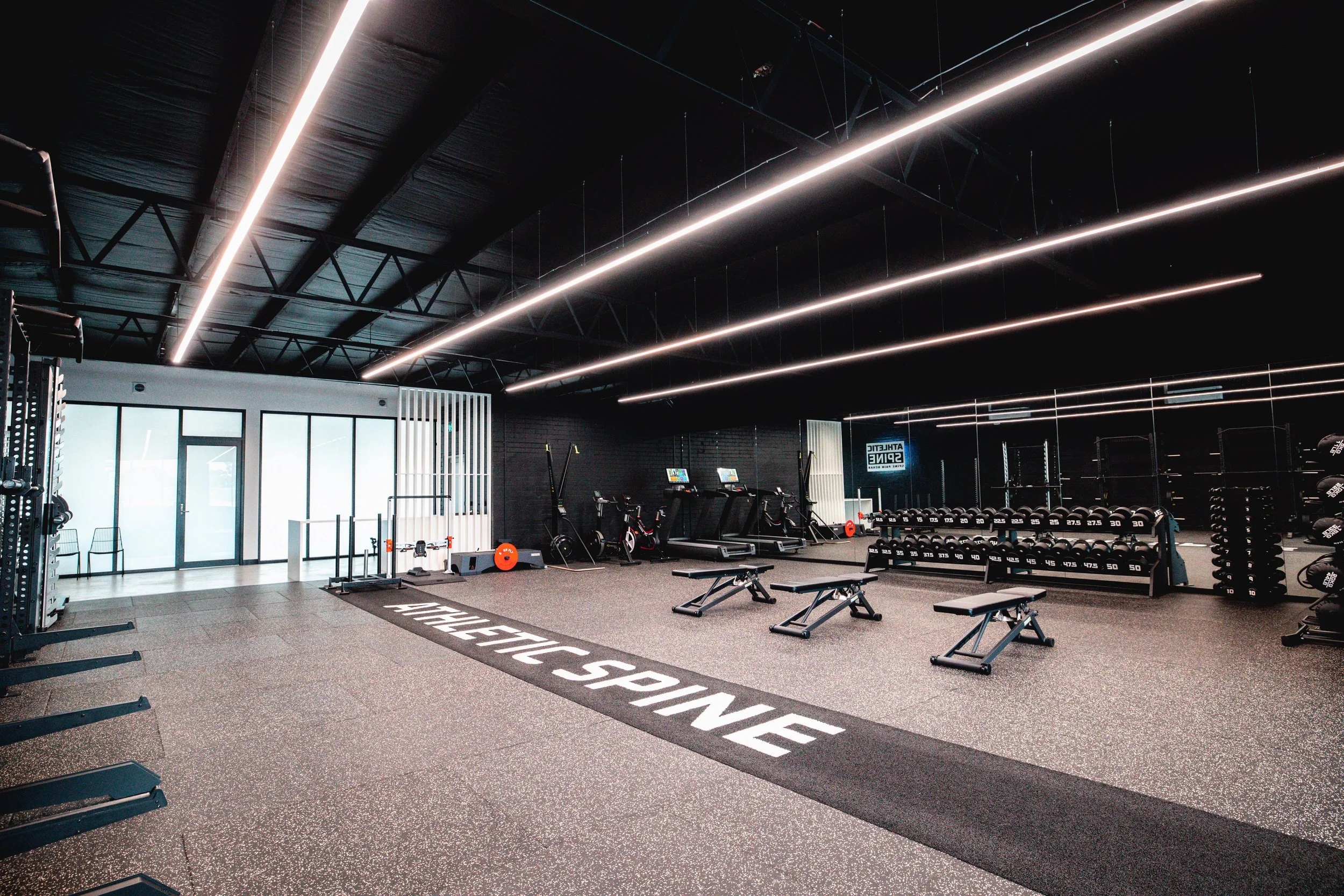
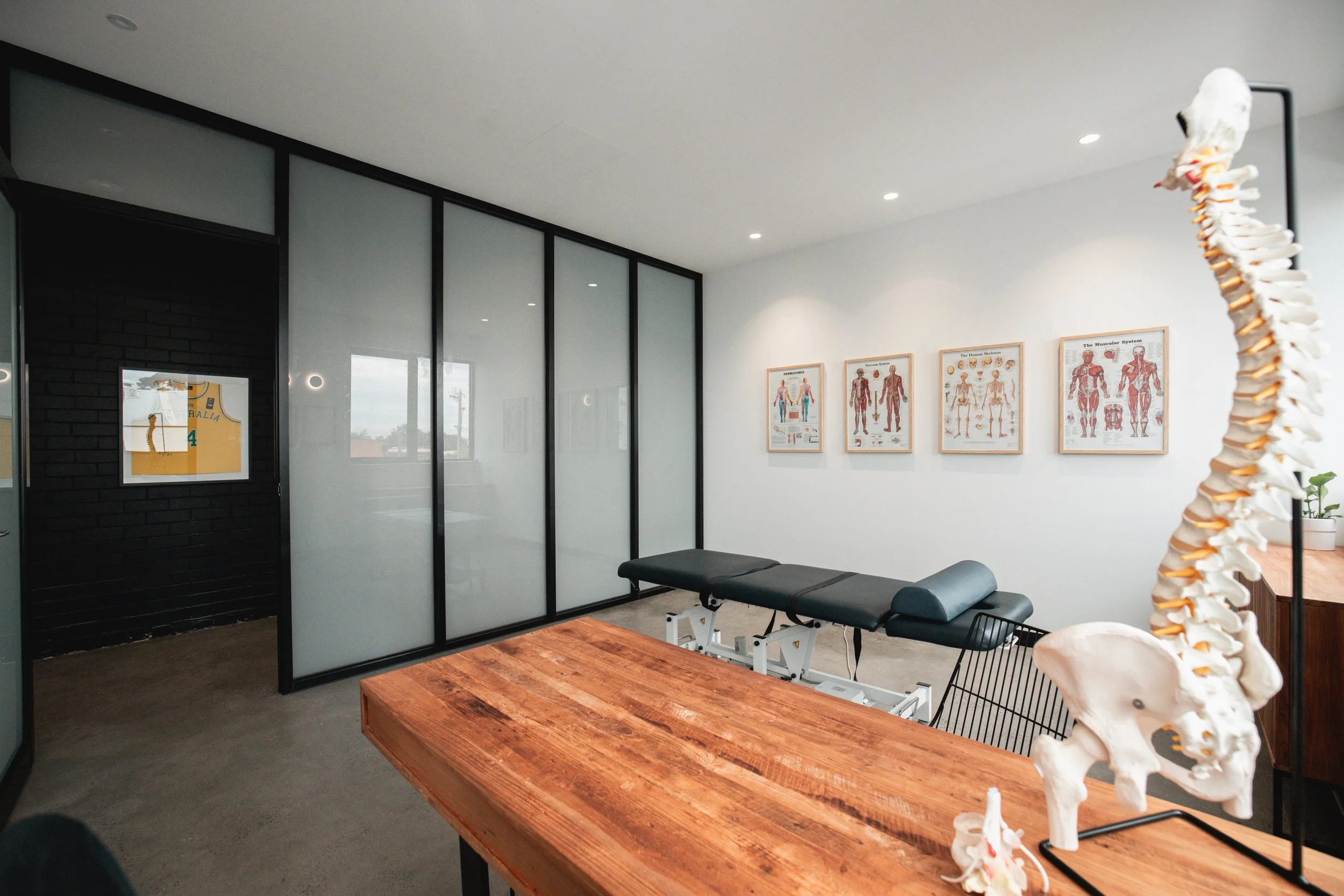
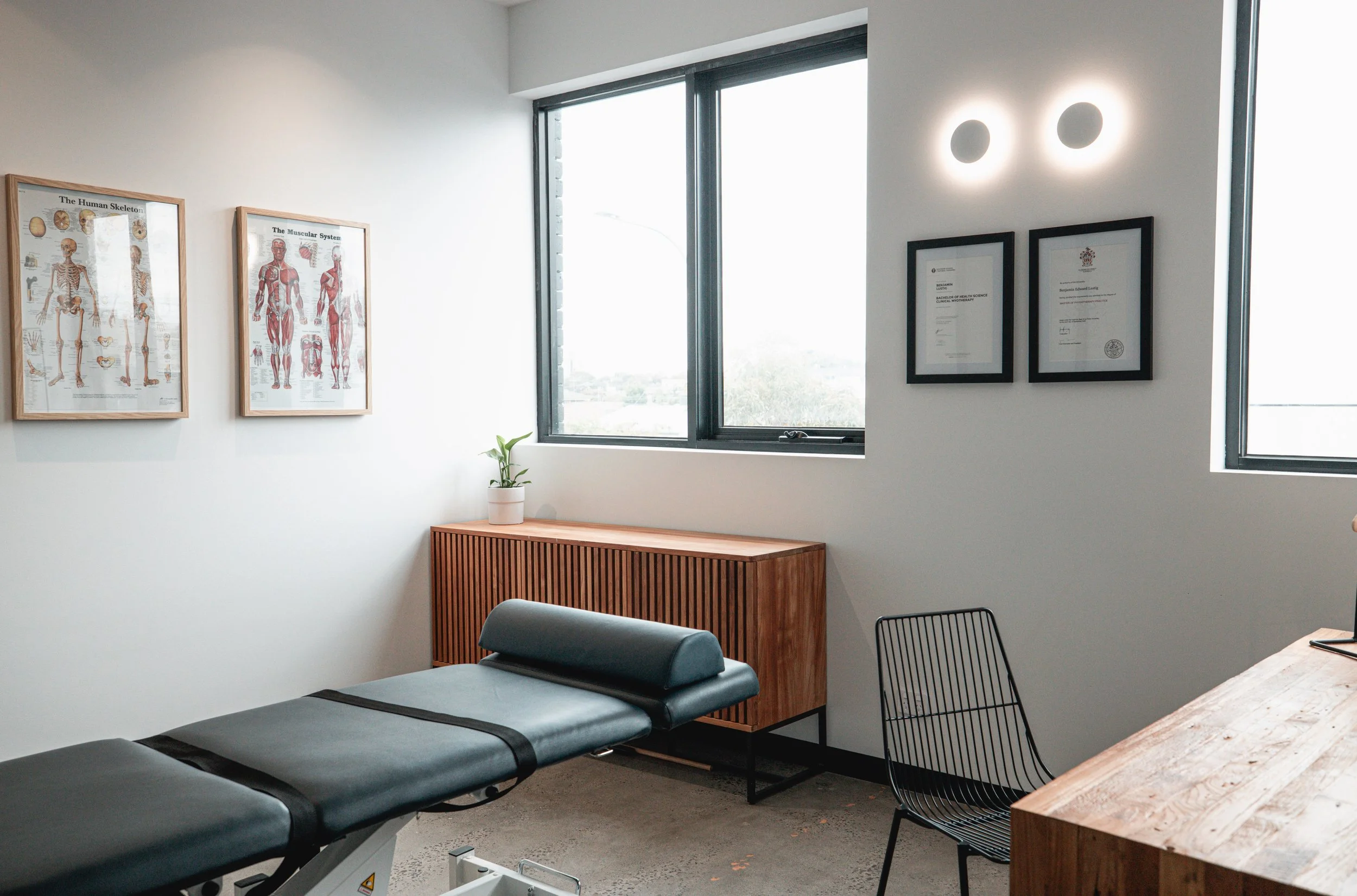

Are You A New Patient?
All new patients are invited to book an initial Physiotherapy consultation. The initial consultation includes:
Medical & injury history
Clinical and/or performance related goals established
Full Physiotherapy assessment & diagnosis
Individualised posture, mobility, strength and technique corrections
Modification of daily and/or training movements to reduce re-injury risk
Education to enhance understanding of the injury and reduce relapse risk
Follow up to enhance accountability & support
One hour duration
HICAPS available onsite to process private healthcare & Medicare rebates (where eligible)
Meet The Team


YOMITHA NAVARATNE
Benjamin Lustig
FounderBHSc M. Physio
M. Sports PhysioRecent Blogs





Location
Athletic Spine is located at 83A Weston Street, Brunswick, Victoria 3056
For Details on available services and to book a session, click the link below.
Contact
We greatly look forward to hearing from you. Please complete the form below to get in touch. Otherwise you can book an appointment online here.