

Spondyloarthropathies & Axial Spondyloarthritis Rehabilitation in Brunswick
Clinical management, spinal mobility preservation, and progressive strength conditioning for inflammatory spine conditions.
Managing an inflammatory spinal condition requires a very different approach from treating a standard mechanical back strain. Spondyloarthropathies, including axial spondyloarthritis and ankylosing spondylitis, cause persistent joint inflammation, deep morning stiffness, and progressive restriction across the spine and sacroiliac joints.
When inflammatory flares occur, natural protective stiffness can make movement feel daunting. However, avoiding physical activity accelerates spinal stiffening and weakens the supporting musculature around your trunk and hips. At Athletic Spine, we focus on preserving spinal mobility, maintaining ribcage expansion, and building physical resilience through structured, mechanics-first exercise.
Working alongside your rheumatologist or general practitioner, our clinical team designs individualised movement and conditioning programs that help you manage symptom fluctuations, protect long-term posture, and stay active in the sports and daily routines you value.
WHO wE’VE wORKED wITH








Understanding Spondyloarthropathies & Inflammatory Back Pain
Spondyloarthropathies represent a family of chronic inflammatory rheumatic conditions that primarily target the axial skeleton (spine and sacroiliac joints) as well as entheses, the sites where tendons and ligaments attach to bone.
Axial Spondyloarthritis & Ankylosing Spondylitis
Axial spondyloarthritis primarily affects the sacroiliac joints at the base of the pelvis and the joints along the lumbar, thoracic, and cervical spine. Over time, unchecked inflammation can trigger new bone formation along spinal ligaments, leading to progressive stiffness. Targeted extension and rotational mobility exercises help maintain spinal range of motion and upright posture.
Enthesitis & Peripheral Joint Involvement
Beyond the spine, spondyloarthropathies frequently cause inflammation at tendon insertion points, most notably at the Achilles tendon, plantar fascia, or around the hips and ribcage. Understanding how whole-body biomechanics distribute physical stress allows us to modify exercises so peripheral tendon attachments are not overly irritated during training.
Inflammatory vs. Mechanical Back Pain
Unlike mechanical back pain that typically worsens with movement and settles with rest, inflammatory spinal pain often causes severe early morning stiffness lasting longer than 30 to 45 minutes and improves with gentle physical activity. Recognising these distinct symptom patterns allows us to tailor the timing and intensity of your rehabilitation. Learn more about interpreting clinical symptoms in our guide on why scan findings don't tell the whole story. Read More
Our Clinical Management Approach
Managing an inflammatory spinal condition requires balancing joint protection during active flare-ups with progressive conditioning during calmer phases. We anchor our rehabilitation in four core principles:
- Building Mechanical Resilience: Even in the presence of an inflammatory diagnosis, strengthening the musculature around your spine and hips improves how your body absorbs everyday physical stresses.
- Progressive Loading Over Extended Rest: Prolonged rest increases morning stiffness and deconditions postural muscles. We scale movement intensity up or down based on your daily symptom presentation rather than stopping activity altogether.
- Restoring Daily Function Over Chasing Pain Scores: Our focus is maintaining your ability to rotate, extend, breathe deeply, and participate in work or sport rather than waiting for zero discomfort.
- Fostering Patient Independence: We equip you with daily mobility routines, flare-up pacing strategies, and self-management tools so you stay in control of your condition between consultations.
Components of Your Clinical Assessment
Your initial consultation establishes a clear functional baseline across your spine, ribcage, and peripheral joints.
1. Inflammatory Symptom & Flare-Up Profiling
We review your medical history, current medications, rheumatology notes, and daily symptom rhythms, including morning stiffness duration and fatigue patterns. If you are experiencing uninvestigated inflammatory symptoms, review our guide on 5 warning signs your lower back pain needs professional assessment.
2. Spinal Mobility & Ribcage Expansion Testing
Inflammation in the costovertebral joints can restrict chest wall movement. We measure segmental spinal flexion, extension, rotation, and thoracic ribcage expansion to establish objective benchmarks and identify early stiffness before it restricts daily function.
3. Hip, Pelvis & Enthesis Screening
Because restricted thoracic or lumbar mobility often forces the hips to work harder, we assess hip joint range, gluteal strength, and common enthesitis sites such as the Achilles tendon and pelvis to ensure balanced movement across your lower body.
4. Individualised Pacing & Conditioning Plan
Your clinician builds a two-tier program: a low-irritability mobility and breathing routine for high-symptom days, and a progressive strength and cardiovascular plan for settled periods.
Related Spinal Pathways & Services
Athletic Spine provides structured clinical care pathways tailored to your specific phase of rehabilitation, ongoing management, or physical performance:
- Chronic & Persistent Injury Rehabilitation: Looking for long-term conditioning strategies for ongoing spinal stiffness? Explore our chronic injury rehabilitation service.
- Spine Injury & Rehabilitation: Managing an acute mechanical flare-up alongside an underlying spinal condition? Review our spine injury & rehabilitation service or learn more about our non-surgical spine injury care.
- Spine Prehab Assessment: Want to establish objective spinal mobility and strength baselines before starting a new training block? Explore our spine prehab assessment service.
- Spine High Performance Assessment: Aiming to maintain or return to demanding gym training and competitive sport with an inflammatory spine condition? Discover our spine high performance assessment.
- Spine-Related Run Screening: Experiencing hip, Achilles, or lower back stiffness while running? Learn how our spine-related run screening evaluates running mechanics and impact forces.
- Post-Spinal Surgical Rehabilitation: Recovering from a spinal procedure? Explore our post-spinal surgical rehabilitation page for structured recovery pathways.
- General Musculoskeletal Care: Need targeted support for peripheral joint or tendon symptoms such as Achilles or plantar fascia pain? General physiotherapy at Athletic Spine & Injury Rehab Clinic can help clarify your diagnosis and guide next steps.
Why Choose Athletic Spine for Spondyloarthropathy Care
Spine-Specific Biomechanical Expertise
We understand the mechanical demands placed on an inflammatory spine and focus on targeted extension, rotation, and postural endurance rather than generic stretching.
Collaborative Medical Care
Physiotherapy works best alongside appropriate medical management. We communicate directly with your general practitioner or rheumatologist to ensure your physical conditioning aligns with your medical treatment plan.
Adaptable Programming for Flare-Ups
Inflammatory symptoms fluctuate. We teach you how to adjust exercise intensity and movement selection during flare-ups so you maintain consistency without aggravating sensitive joints. Read Less
Frequently Asked Questions About Spondyloarthropathies
Is strength training safe if I have ankylosing spondylitis or axial spondyloarthritis? +
Yes. Current rheumatology and physiotherapy guidelines strongly recommend regular resistance training alongside mobility and aerobic exercise. Strengthening the back extensors, glutes, and trunk muscles supports spinal posture and improves overall physical resilience when progressed sensibly.
Learn what to expect during your initial consultation in our guide on first physiotherapy appointments.
Should I exercise during an inflammatory flare-up? +
During an active flare-up, complete bed rest usually increases stiffness. Instead of stopping movement entirely, we scale back high-impact or heavy resistance exercises and focus on gentle spinal mobility, thoracic breathing drills, and light walking until acute inflammation settles.
Do I need a referral from my rheumatologist to book an assessment? +
No referral is required to book a private physiotherapy consultation at Athletic Spine. However, bringing any recent blood test results, imaging reports, or letters from your rheumatologist or GP helps us tailor your care from day one.
Meet The Team

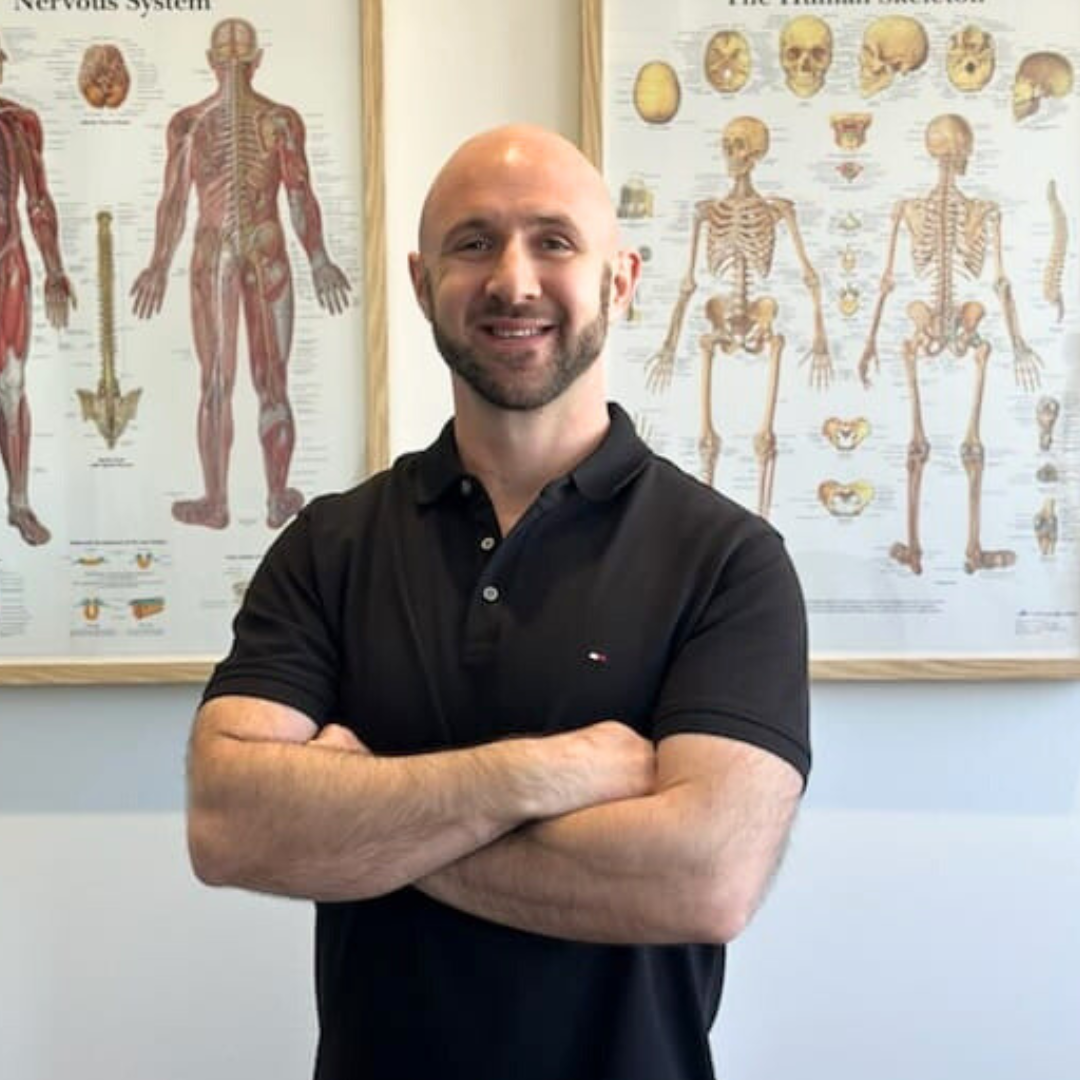
YOMITHA NAVARATNE
Benjamin Lustig
Founder BHSc M. Physio
M. Sports PhysioContact Us
We greatly look forward to hearing from you. Please complete the form below to get in touch. Otherwise you can book an appointment online Here.
Location
Athletic Spine is located at 83A Weston Street, Brunswick, Victoria 3056